Daniel Negreanu, better known as “Kid Poker,” is a poker player who has won 7 World Series of Poker (WSOP) bracelets, accumulating more than $53 million in live tournament winnings. That puts him in seventh place on the all-time list of tournament winnings.
Negreanu stands out for the diversity of modalities he has championed, from Pot Limit Hold’em to international tournaments in Asia and Europe. All this makes Negreanu a true “chameleon” at the tables, always ready to adapt and emerge victorious.
The bracelets that launched him to stardom
He won his first bracelet in 1998 in a $2,000 Pot Limit Hold’em event, pocketing 169,460 dollars, which marked the beginning of a career full of successes. Over time, the other bracelets came in events ranging from Limit Hold’em to the prestigious Poker Players Championship, which he won in 2024, taking home $1,178,703.
One of the most memorable moments was when he took down the WSOP Asia-Pacific Main Event in 2013, with a prize of AUD 1,038,825. Each bracelet has its own story, which has helped build the legend that Daniel Negreanu is today.
The style that defines him
Negreanu’s ability to read the other opponents at the table and understand the metagame s sets him apart. It’s not just about guessing what cards they have but understanding how they think, what motivates them, and how they will react when the pressure mounts. This ability to “read minds” and understand the environment has been a constant in his career, but Negreanu has also been able to adjust to changes in the game, such as the new strategies brought by the young prodigies of online poker.
Negreanu hasn’t stayed on top just because of his skill at the table; it’s also because of his solid focus on mental preparation. For him, poker is as much a game of skill as emotional control. Knowing when to attack, when to fold, and how to stay calm when the going gets tough are aspects he considers essential to success. He often says it himself: “Emotional control is the key”.
The ambassador of poker
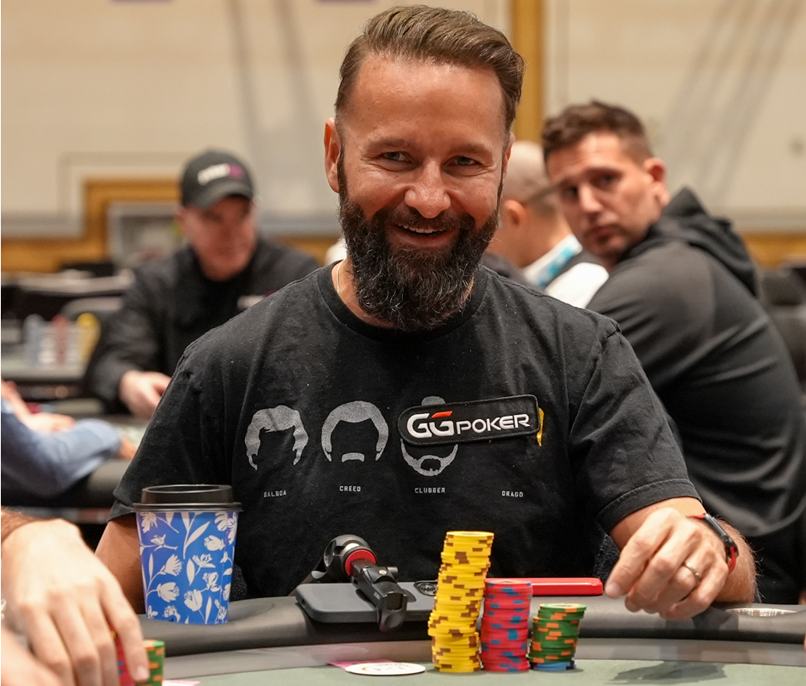
Daniel Negreanu is not just a player but a true poker ambassador. From his early days to date, he has promoted poker as a game of strategy and skill, seeing the activity as more than just a gambling pastime. His induction into the Poker Hall of Fame in 2014 is a testament to his contribution and impact on the poker world, both “on” and “off” the tables.
Negreanu has also been a strong voice in online poker advocacy, fighting for fair regulation in the United States. His work to improve the poker industry has benefited players of all levels, from novice to experienced players.
A constantly evolving player
What makes Negreanu unique is his ability to reinvent himself. Despite the ups and downs in his career, the rise of online poker, and the new strategies that have emerged, he has managed to stay relevant. Negreanu has competed with the so-called “young wizards” of poker, who have brought a more theoretical approach to the game, but he has learned from them, adjusting his style to remain a relevant contender.
In his interviews, Negreanu frequently discusses the importance of continuous improvement. For him, every tournament and every hand is an opportunity to learn something new, as his goal is not just to win but to evolve with the game—advice that any player would do well to follow.
Daniel Negreanu has done more than win money and trophies; he has helped redefine what it means to be a poker player. His legacy is not only measured in bracelets but also in how he has presented poker as a sport that is accessible, fun, and full of strategy. If Negreanu has taught us anything, it is that poker is a game for everyone, where the mind, preparation, and passion can take us to the top.
What do you think about this topic? Do you want to know more about Daniel Negreanu?
If you want to find the best platform to play poker online, visit the following link to contact us.
Top image by World Poker Tour, via Flickr.com, licensed under Creative Commons Attribution-No Derivatives (CC BY-ND 2.0). Middle image by Captain Q Farf, via Wikimedia Commons (CC BY-SA 4.0).