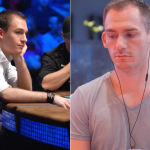
When discussing the greatest figures in world poker, Shaun Deeb undoubtedly holds a prominent place. With multiple World Series of Poker (WSOP) bracelets and millions of dollars in earnings, his story is fascinating—not just for his professional achievements, but for the path he traveled from his early years to becoming the elite player he is today. This article explores in detail Shaun Deeb’s childhood and adolescence, the crucial years that forged his character and passion for cards.
A childhood in upstate New York
Shaun Frank Deeb was born on March 1, 1986, in Troy, New York, and raised in nearby Schenectady. Growing up in a close-knit Lebanese-American family with deep community ties, Deeb’s upbringing was shaped by his cultural heritage and his family’s entrepreneurial example.
His grandfather, Ted Deeb, founded a family business, Ted’s Fish Fry, in 1949, which began as a modest seafood stand in Watervliet, New York. Over time, this venture grew into a beloved regional chain known for its fried fish sandwiches and family atmosphere. The business, now in its third generation of family leadership—including Shaun’s father, S.K. Deeb—reflects the entrepreneurial spirit that characterized the home where the future poker player grew up.
From a very young age, Deeb was immersed in a close-knit family environment that valued tradition and hard work. This atmosphere, combined with the family food business, created a context where values like perseverance and dedication were commonplace. In fact, years later, when Shaun needed to choose an alias for playing on Full Tilt Poker, he chose “tedsfishfry” as a direct tribute to the family legacy.
The origin of a competitive mind
During his childhood, Deeb displayed logical intelligence well above average, though it wasn’t always channeled toward the traditional educational system. His mind worked in terms of probabilities and outcomes, a trait that made him stand out in any recreational activity he undertook. Troy, a city with a hardworking profile, provided the perfect backdrop for a young man constantly looking for ways to demonstrate intellectual superiority through games.
From a very young age, Shaun manifested an extremely competitive personality; he wasn’t content with just participating—he needed to understand the internal mechanics of every game to maximize his chances of victory. This obsession with efficiency would later turn him into a master of “mixed games” variants.
The Deeb household buzzed with lively challenges. Supported by his family, Shaun developed unshakable confidence in his decisions. This self-assurance, built during childhood games, became a foundation that helped him handle swings without hesitation. While most peers favored sports, Shaun split his energy between physical activity and expanding his strategic skills—laying a seamless path from amateur to poker professional.
Grandma Ellen
One of the most touching and significant aspects of Shaun Deeb’s childhood is his relationship with his grandmother, Ellen Deeb. It was she who, when Shaun was just five years old, taught him how to play poker along with other card games during his early childhood in Troy. What, for many, might have been a simple, innocent pastime between grandmother and grandson was the seed of his eventual professional career.
This early exposure to card-based strategy games was fundamental in developing his familiarity with the world of chance and strategy. The casual games during family moments created a special bond while introducing young Shaun to the fundamentals of the game he would dominate years later.
The importance of this maternal figure in Deeb’s life was spectacularly demonstrated years later when, in 2011, Shaun decided to give his grandmother an unforgettable Christmas gift: entering her into the WSOP Main Event. At 91 years old, Ellen Deeb became the oldest participant in that tournament. When introduced at the start of Day 1C, she famously told the crowd: “Everyone is playing for second place.” Her poker spirit was undeniable; when she was eventually eliminated, she even tried to “re-buy” with a wad of cash Shaun had given her as a joke.
Adolescence and the transition to strategy games
As he entered adolescence, Shaun Deeb’s interest in games expanded toward video games and other forms of organized competition. During his high school years, he began to stand out not just for his innate skill but for his capacity for high volume, a trait that would become his hallmark in online poker.
Deeb wasn’t the typical teenager playing for distraction; he approached video games with the mindset of a systems optimizer. It was during this stage that he began to understand the value of time and repetition, realizing that mastery in any discipline required massive exposure to different scenarios—a concept he would later apply by playing dozens of poker tables simultaneously.
His adolescence coincided with the poker boom on television and the “Moneymaker Effect” but by the time the rest of the world was discovering Texas Hold’em, Deeb already had considerable experience. In high school, Shaun was already organizing games with friends, and it quickly became evident that his understanding of the game was several levels above his peers’. He didn’t just play his cards; he played his opponents’ weaknesses, using an aggressiveness that intimidated other young people his age. This stage was crucial for defining his “loose-aggressive” playstyle.
The discovery of online poker
The definitive turning point occurred toward the end of his adolescence when Deeb discovered internet poker. What began as a curiosity quickly transformed into a productive obsession. While his peers prepared for college or sought traditional summer jobs, Shaun spent hours in front of the screen, dissecting the software of emerging poker rooms. It was in this digital environment where his capacity for “multi-tabling” was born. The speed of online play fit perfectly with his hyperactive brain, allowing him to process information at a rate that would be impossible in a physical casino.
For Shaun, the transition from adolescence to young adulthood wasn’t marked by a search for identity, but by the consolidation of a career that had already begun in his bedroom. His parents, seeing the tangible results and the seriousness with which their son approached the game, showed an understanding that was rare for the time. Shaun wasn’t wasting his time; he was building a bankroll and a reputation. By the time he graduated high school, he already had the experience of a veteran, having played more hands in a single year than many live players play in a lifetime. His adolescence ended not with a diploma as the ultimate goal, but with the certainty that the poker tables were his true ecosystem.
The multi-tabling phenomenon
One of the characteristics that distinguished Shaun Deeb from his early years was his ability to handle multiple tables simultaneously. He was a pioneer in popularizing this practice, reaching up to 40 tables at a time during his peak activity. This skill was the product of deliberate practice; Deeb explained that it requires gradual progression, starting with two tables and increasing only when comfortable.
By 2007, Deeb had climbed to the top of the online poker rankings, becoming the first player to win the PokerStars Tournament Leaderboard in consecutive years (2007 and 2008). He also held the #1 spot on the PocketFives rankings for several months during this period, solidifying his reputation as a prolific and profitable online tournament specialist.
What do you think about this? Want to find out more about Shaun Deeb?
If you want to find the best platform to play poker online, visit the following link to contact us.
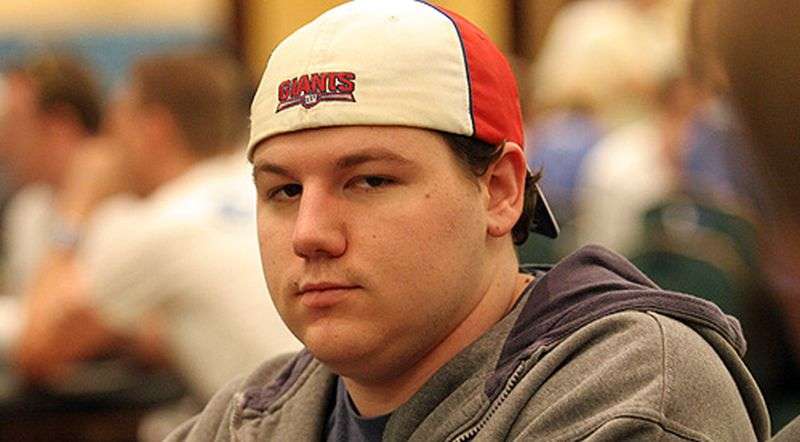
Image via alchetron.com under Creative Commons license.