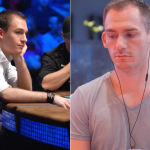
In professional poker, few names resonate like Phil Ivey and Daniel Negreanu. Both have defined eras, redefined strategies, and elevated the game to new heights. Although they share iconic status, their styles, careers, and contributions to modern poker are notably different. In this article, we’ll analyze their playing styles, major achievements, and legacy.
Origins and rise to fame
Phillip Dennis Ivey was born on February 1, 1977, in Riverside, California, but his legend began to take shape in the casinos of Atlantic City. From an early age, Ivey developed an obsession with the game, first learning to play five-card stud with his grandfather. His determination to play in casinos before reaching legal age led him to obtain a fake ID, earning him the nickname “No Home Jerome,” as he seemed to live in the casinos. This period of intense practice and dedication during his formative years laid the foundation for one of the most technical and respected careers in poker history.
Daniel Negreanu was born on July 26, 1974, in Toronto, Canada, and showed ambition and talent for games from a young age. After dropping out of high school, he immersed himself in the world of illegal card games and charity casinos in his city. With unwavering confidence, he moved to Las Vegas at age 22 to pursue his dream, but after exhausting his budget, he returned to Toronto to rebuild it—demonstrating a resilience that would define his career.
Parallel careers, divergent paths
Phil Ivey began his career in the 1990s and quickly earned the nickname “Tiger Woods of Poker” for his technical dominance and commanding presence. With 11 World Series of Poker (WSOP) bracelets, he is among the most decorated players of all time. His versatility in mixed games and high-stakes events cements him as a key figure in the industry.
Daniel Negreanu emerged in the late 1990s and became the youngest WSOP bracelet winner at the time. He has won 7 WSOP bracelets and 2 World Poker Tour (WPT) titles. Negreanu has also been named WSOP Player of the Year twice (2004 and 2013), highlighting his consistency and adaptability.
Playing style: intuition vs. social reading
Phil Ivey is known for his enigmatic, almost impenetrable style. His ability to read situations without showing emotion has made him a feared player. Ivey relies on sharp intuition, developed over thousands of hours of play, allowing him to make bold decisions at critical moments. His style is aggressive yet calculated, and he rarely acts on emotional impulses.
Daniel Negreanu, in contrast, has built his reputation on social reading. His ability to interpret gestures, behavioral patterns, and body language is legendary. Negreanu prefers a more conversational approach at the table, using dialogue to gather information and destabilize opponents. His style is more open, adaptable, and focused on exploitative play, adjusting his strategy based on the opponent’s profile.

Major achievements and notable figures
Both players have surpassed the $50 million mark in live tournament earnings, although their paths to that milestone have been different. Ivey has shined in high-risk events like the Poker Players Championship and private tournaments with million-dollar stakes. His reputation in the cash game circuit is nearly mythical. With 11 WSOP bracelets, he ranks second among professional poker players (in terms of WSOP bracelets), behind only Phil Hellmuth. Notably, all his bracelets were won in non-Texas Hold’em events, underscoring his versatility as the best “all-around” player. He was also the youngest player to reach 10 bracelets, breaking Hellmuth’s record. His consistency in the Main Event is enviable, with four top-25 finishes, including a seventh-place finish in 2009.
Daniel Negreanu has played key roles in televised tournaments like High Stakes Poker and The Big Game, where his charisma and entertainment skills shine. He has 7 WSOP bracelets and was the first player to win a bracelet in Las Vegas, Europe, and Asia-Pacific. Negreanu is also the only two-time WSOP Player of the Year (2004, 2013). His best Main Event result is 11th place, and he has over 250 WSOP cashes. Through platforms like MasterClass and YouTube, he has greatly expanded his influence.
Success beyond the WSOP
Both players have achieved monumental success in other circuits and tournaments. Daniel Negreanu has two World Poker Tour (WPT) titles and was WPT Player of the Year in 2004–2005. One of his most memorable feats was finishing second in the 2014 “The Big One for One Drop,” earning an astonishing $8,288,001. More recently, in 2022, he won the Super High Roller Bowl VII, taking home $3,312,000. His total live tournament earnings exceed $52 million.
Phil Ivey also has two WPT titles and an impressive list of results in global high rollers. For example, in 2014 he won a high roller event at the Aussie Millions for $3.6 million. Like Negreanu, he has had major successes in the Triton Poker series, with victories and final tables totaling millions. His live tournament earnings are also estimated to exceed $52 million. However, perhaps his most legendary achievement is his dominance in online poker, where his Full Tilt Poker account reportedly earned over $20 million in profit—the highest in the site’s history.
Influence on modern poker
Phil Ivey has influenced generations of players with his technical approach and mastery of mixed games. His style has inspired those seeking to perfect the mathematical and psychological aspects of poker. Additionally, his involvement in controversies like the edge sorting case with Crockfords Casino has sparked debates about ethics and the limits of professional play. Ivey always maintained that he was simply using his skill to exploit a legal advantage, but the courts ruled against him. After a few years of relative silence, Ivey has experienced a resurgence in recent years, returning to the tables with a more focused attitude and a presence that continues to command respect. He was inducted into the Poker Hall of Fame in 2017, the first year he was eligible.
Daniel Negreanu has been a poker ambassador. His active participation on social media, blogs, and educational platforms has democratized knowledge of the game. He has promoted responsible poker, transparency in tournaments, and has been a vocal critic on issues like rake and prize structures. His influence extends to poker culture, where he has helped build a more open and accessible community—essential for making the game more approachable to a new generation of players. He was inducted into the Poker Hall of Fame in 2014. Negreanu represents the human connection and teaching ability that has helped popularize poker as a sport of mental skill.
Legacy and future vision
Phil Ivey’s legacy is built on technical respect and mystery. He represents the ideal of the perfect player: silent, lethal, and deeply strategic. Although he has reduced his participation in public tournaments, he remains a revered figure in private circles and elite events.
Negreanu, meanwhile, remains active in tournaments, media, and social platforms. His legacy lies in the humanization of poker—showing that the game can be competitive and empathetic at the same time. His vision of poker as a tool for personal and social growth makes him a role model for new generations.
Phil Ivey and Daniel Negreanu have taken different paths, but both have left an indelible mark on modern poker. Ivey represents silent excellence; Negreanu, communicative mastery. Together, they have elevated the game, transformed it, and brought it to global audiences. Comparing them is not about choosing one over the other, but understanding how two styles can coexist and enrich the same art.
What do you think about this topic? Would you like to learn more about Daniel Negreanu or Phil Ivey?
If you want to find the best poker deals, you can contact us by visiting the following link.
Image on the left by Word Poker Tour via Wikimedia.org under Creative Commons license.
Image on the right by Ralph Unden via Wikimedia.org under Creative Commons license.