The world of poker is defined by tales of legendary plays, and none stand out more than Doyle Brunson’s back-to-back World Series of Poker (WSOP) championships in 1976 and 1977. Against the odds, Brunson claimed victory both years holding the seemingly unremarkable 10-2, transforming it from a discard into an icon.
Doyle Brunson, a pioneer with strategic vision
Doyle Brunson was not only a world champion: he is considered one of the pioneers of modern poker. His strategic approach, intuition, and decision-making skills (based on reading opponents and adverse situations) made him a cult figure. His legacy goes beyond trophies: he is the author of the famous Super/System, a mentor to generations, and a master at turning imperfect information into high-impact decisions. Before software, solvers, and GTO, Brunson played with what he had: experience, psychology, and a visceral understanding of the game.
The WSOP in the 1970s
In the mid-1970s, the WSOP was very different from the global spectacle it is today. Tournaments were played at Binion’s Horseshoe Casino in Las Vegas with much lower participation, but with fierce competition among the best players of the time. In this environment, Doyle Brunson, already renowned for his skill in cash games, sought to make his mark in tournaments. Poker was a game where reading opponents and the courage to make risky plays were worth more than the cards themselves.
WSOP 1976: The first miracle of 10-2
At the final table (the last round of play with the remaining competitors) of the 1976 WSOP, Doyle faced player Jesse Alto. With the tournament in its decisive stage, Brunson was dealt 10-2 offsuit (cards of different suits, typically considered a weak starting hand). Jesse Alto had Ace-Jack of hearts, clearly superior. The betting quickly intensified, with Brunson calling (matching Alto’s bet) and then betting heavily after the flop (the first three community cards dealt face up). The board brought a 10, giving Brunson a pair, but still keeping him at a disadvantage.
The magic came on the turn and river: Brunson completed a runner-runner straight to win. It wasn’t just improbable cards Brunson’s confidence made the moment legendary, turning 10-2 into a symbol of daring strategy and psychological acumen.
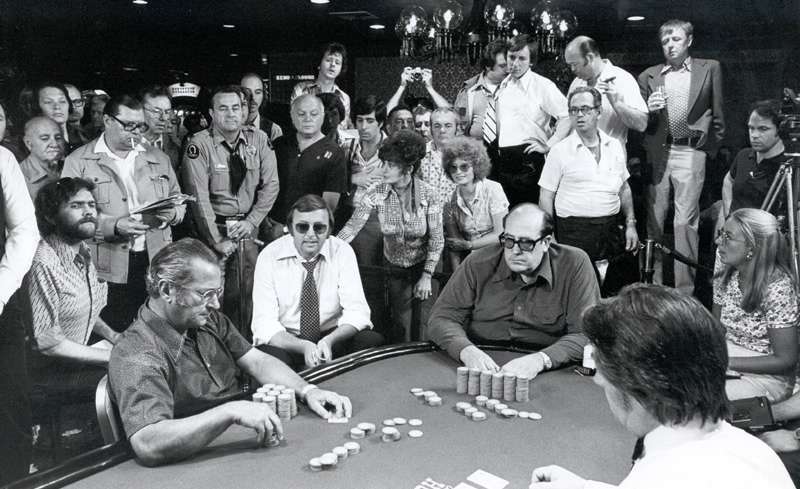
WSOP 1977: Repeating the miracle
A year later, in 1977, history repeated itself against player Gary Berland. Doyle was back at the final table with the chance to become a two-time champion. Fate would have it that, once again, he was dealt 10-2 offsuit. Faced with a stronger hand from his opponent (Berland had 8-5 this time), Doyle played aggressively, putting on the pressure and betting with conviction.
The flop delivered, and once again Brunson completed a straight, claiming his second consecutive championship with 10-2. This victory underscored his instinct and audacity that defined his approach.
The strategic significance of 10-2
10-2’s legacy rose from how Brunson played it—not the odds. He showed that table reading and psychological pressure can turn weak cards into powerful weapons, a philosophy that remains influential beyond textbook strategy.
10-2 illustrates that the value of a hand lies in its play, not just its math. Doyle knew how to turn weakness into strength and build a personal narrative of dominance.
From myth to legend
Since those triumphs, 10-2 has become “The Doyle Brunson hand,” featured in books, shirts, memes, TV, and teaching. The legend endures as a symbol of strategic courage, though its real-world effectiveness is questionable.
Doyle Brunson’s double triumph with 10-2 was more than luck—it shaped poker’s culture. Turning a weak hand into consecutive world titles, he proved that a great story and strategy could leave a lasting mark on the game.
Retrospective technical analysis
Today, with GTO and exhaustive analysis, experts largely consider 10-2 indefensible. Yet the result stands: Brunson had low expected value by modern standards, but tournament context and psychological dynamics added a crucial human factor that numbers miss.
The success of 10-2 in 1976 and 1977 was an example of how metagame can trump theoretical play. Facing opponents under pressure, creating an aggressive image, and making unexpected decisions can lead to unlikely results. That approach continues to inspire many creative players who are looking for more than just probabilities.
Tactical analysis
From a statistical perspective, 10-2 is a weak hand with low preflop expected value. What made it special was the context: Brunson knew how to apply pressure, when to induce mistakes, and how to manipulate his opponent’s perception. His bet was not mathematical, but behavioral. The metagame was his primary tool, and each of these victories showed how intangible information can change the outcome.
10-2 today
Although 10-2 is currently considered a weak hand, some players occasionally use it as a tribute, especially at televised tables or special events. The history behind the card gives it a symbolic value that transcends strategy. At private tables, it is even joked that “if you win with 10-2, you do it in style.” In addition, this hand has been cited in movies, articles, and live broadcasts, above all as an example of a legendary play. Not because it is profitable, but because it represents a key moment in the evolution of poker as a mental sport and cultural expression.
Today, more than 45 years later, these plays are still studied as examples of how creativity and instinct can overcome even the most unfavorable odds. For any serious player, the story of Brunson’s 10-2 serves as a reminder that in poker, as in life, sometimes you have to write your own rules.
What do you think about this topic? Would you like to learn more about Doyle Brunson’s plays?
If you want to find the best platform to play poker online, visit the following link to contact us.
Image by University of Nevada at Las Vegas Special Collections on the World Series of Poker via Wikimedia.com under a Creative Commons license.