In the vast ecosystem of online poker, some terms transcend parlor jargon and become fundamental pillars of a player’s financial strategy, whether novice or professional. One of these terms is “rakeback.” In this article, we will explain what rakeback is and learn more about the origin of the term in professional poker.
Introduction to the concept of rakeback in the poker ecosystem
To understand what rakeback is, it is first imperative to understand how “rake” works. In poker, unlike other casino games such as blackjack or roulette, players do not bet against the house, but against each other. The casino or online poker room acts as a facilitator, providing the software, the dealer, the cards, and a secure environment. To monetize this service, the house charges a small commission from each pot played or an entry fee for tournaments. This commission is called rake.
Rakeback, as the name suggests, is the return of a portion of that commission to the player. Rakeback is a type of “loyalty program” or “commercial incentive” that allows users to recover a percentage of the money they have paid to the poker room to play.
In financial terms, rakeback transforms the player’s cost structure. For example, if a player pays $1,000 in commissions over a month and has a 30% rakeback agreement, they will receive $300 back into their account. For a professional player or a “grinder” who handles high volumes of hands, rakeback can represent the difference between a losing month and a winning month; therefore, it is not simply an “extra bonus“, but a critical component of the Return on Investment (ROI) and the hourly win rate. In many cases, rakeback serves as a “financial cushion,” reducing variance and improving the sustainability of the player’s budget.
The origin of the word rakeback
The word “rakeback” is an Anglo-Saxon neologism composed of two terms: rake and back. The origin of the term rake dates back to the physical casinos of yesteryear, where dealers used a physical tool—similar to a small wooden or metal rake—to remove the chips corresponding to the house commission from the center of the table. That gesture of “raking” the pot gave the house commission its name. Therefore, rakeback was born organically when poker rooms charged a commission on the pot and, as an aggressive marketing strategy, decided to “give back” part of that collected loot to their most loyal or high-volume customers.
Historically, rakeback did not exist in the form it does today. In the early days of online poker in the late 90s and early 2000s, rooms focused on attracting new deposits through welcome bonuses. However, as the market became saturated, player retention became more important than acquisition. This was when the first affiliates and poker networks began offering direct rakeback deals. The word went from being a niche technicality to becoming the industry standard. Today, although many rooms have renamed their systems as “Rewards Programs” or “Chests,” the term “rakeback” remains the universal term among the player community to refer to the recovery of commissions.
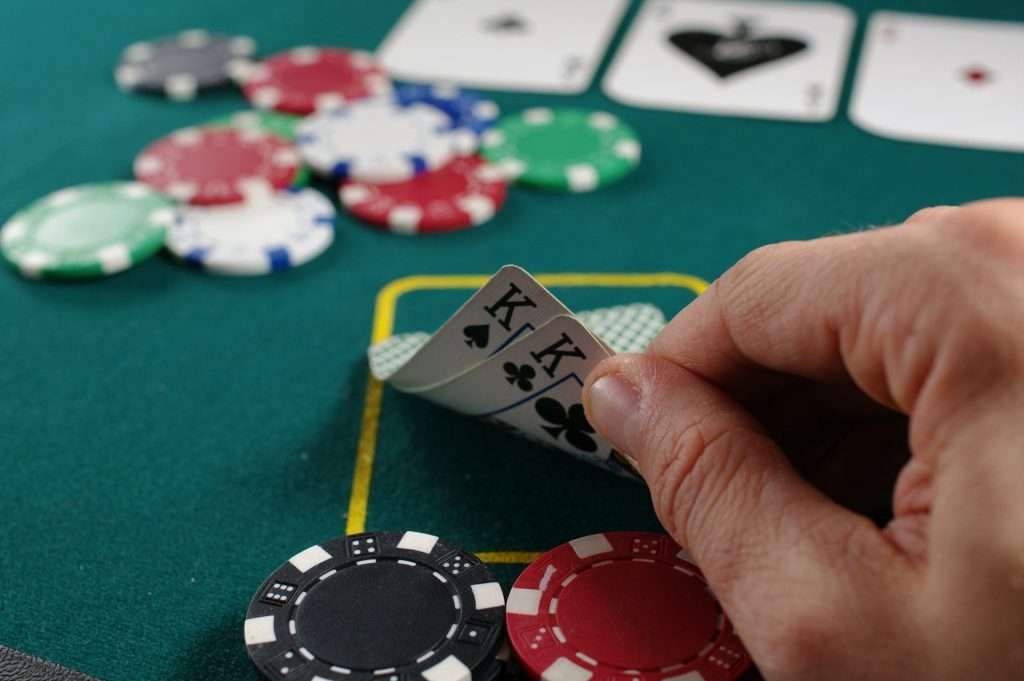
How rake works
For rakeback to exist, rake must first be generated. Poker rooms usually apply a percentage ranging from 2% to 5% of the total pot in each “cash game” hand, with a maximum limit to prevent commissions from becoming excessive in very large pots.
There are different methods to calculate how much rake an individual player has generated, which is fundamental to determining how much rakeback they will receive. In the past, the Dealt Rake was the most common method. Every player dealt into a hand was assigned a proportional share of the rake generated, regardless of whether they contributed to the pot. This benefited conservative players.
Over time, the industry migrated toward Contributed Rake / Weighted Contributed Rake. Here, the rake is assigned proportionally to the amount of money each player actually contributes to the pot. If a player does not enter the hand, they do not generate rake and, therefore, do not accumulate rakeback for that hand. This system is considered fairer, as it rewards active players who generate action at the tables.
In tournaments, the process is simpler: the fee is predetermined. For example, if a tournament costs $110, $100 goes to the prize pool, and $10 is the rake (fee). The rakeback would be calculated based on those $10 of commission.
How rakeback is received
Rakeback can be paid out to players in various ways. The most common is a direct deposit into the poker room account as cash, although it can also be in the form of points or exchangeable bonuses. Rakeback is particularly crucial for regular players or those with a high volume of hands, as it converts a portion of their fixed expenses (the rake) into additional income at the end of the month. However, it is not only professional players who benefit; a recreational player who performs well will also see their bankroll strengthened month by month thanks to this extra.
The strategic importance of rakeback for the player
Beyond profitability, rakeback serves a psychological and bankroll management function. During inevitable downswings, where a player may lose money due to variance, the constant income from rakeback acts as a “buffer,” providing liquidity to keep playing and preventing the bankroll from being completely eroded. In many ways, rakeback is the poker player’s “base salary,” while winnings at the tables are the performance bonus. Without a good rakeback agreement, the opportunity cost of playing in certain rooms can be too high, forcing players to be extremely selective about where they deposit their funds.
The impact of rakeback on poker ecology
The existence and generosity of rakeback programs have a profound impact on the “health” of an online poker room. Very high rakeback attracts professional players, increasing traffic and ensuring tables are available at all hours. However, an overabundance of professional players can make the tables too difficult for novice players, who may lose their money more quickly and leave the game. This has led to constant debate in the industry over the perfect balance: how much to incentivize high-volume players without “suffocating” casual players, who are the engine of the ecosystem.
Rakeback has evolved from a simple “under-the-table discount” to a multi-million dollar industry that dictates the behavior of thousands of players worldwide. As online poker regulation becomes stricter across jurisdictions and operators face higher taxes, the ability for rooms to offer high rakeback becomes limited. Nevertheless, as long as rake exists, the demand for rakeback will exist. The future will likely lean toward more personalized systems, where artificial intelligence analyzes player behavior to offer rewards that maximize their lifetime value on the platform. For anyone serious about poker, understanding and optimizing their rakeback is not optional—it is a fundamental necessity for financial survival at the tables.
What do you think about this topic? Do you want to know more about rake and rakeback?
If you want to find the best poker deals, you can contact us by visiting the following link.
Image by Michał Parzuchowski via Unsplash.com under Creative Commons license.