Erik Seidel’s name stands out effortlessly when we think of poker greats. But it’s not just his 10 World Series of Poker (WSOP) bracelets that have forged his legend. Beyond the numbers, his career is full of lessons for any multi-table tournament (MTT) player looking to not only win but stay relevant in a game as ever-changing as poker.
Beginnings
Erick Seidel was born in New York City (USA) and grew up in Manhattan, in the Upper West Side neighborhood. When he was in high school, he played poker a couple of times but mentioned that he was the least skilled in that group.
After attending Brooklyn College, Erick attended Hunter College, where he studied Liberal Arts. His life changed when he joined the Mayfair Club, where he learned to play backgammon, which he later managed to play professionally. It is important to note that Backgammon is a board game that unites chance with strategic knowledge, which may have influenced his future poker skills.
Foray into poker
Seidel subsequently worked in the U.S. stock market until the October 1987 crash, when he was out of a job. Although this was a difficult time for him, it was at that moment that he began to try a game other than backgammon: poker.
After much learning and participating in several tournaments, Seidel traveled to the World Series in 1988 with a dozen friends from New York. His skills earned him a second-place finish (behind the great Johnny Chan), and he won $280,000.
Return to Wall Street
While Seidel did well at the 1988 WSOP, he began to worry that he could not support his family by playing poker, so he decided to return to work on Wall Street. During the day, his regular job was trading Amex options, while at night, he played poker and focused on the World Series.
In 1995 (seven years later), Seidel finally decided to go 100% into poker. While Seidel wanted to quit his job, he had some doubts. However, his wife encouraged him by saying, “I know you’re not happy at your job…Why don’t we take five years, move to Las Vegas, and see how you do playing poker?” At that point, Saidel quit his job and dedicated himself to playing poker professionally and full-time, and the rest is history.
Innovation disguised as “old school”
Although many see him as an “old school” player, Seidel has stayed competitive by embracing mathematical analysis and modern game theory. He is living proof that in poker, as in life, we can never stand still. That fusion of intuition and meticulous calculation is what sets him apart.
For MTT players, especially those who aspire to the top, it is essential to learn from Seidel’s example. It’s not just about playing the right hand; understanding how the evolution of strategic thinking is key to longevity.
People often underestimate the power of mathematical analysis in poker. Still, after watching Seidel succeed repeatedly, it’s easy to be convinced that balancing instinct with a deep study of the game is essential.
The human face of poker
What’s most striking about Erik Seidel is his technical ability and influence on poker culture. Unlike others driven by ego or pressure, he has maintained a humility and professionalism that has helped give the sport a different image.
It is expected to hear stories of players who, after facing Seidel at the tables, talk about their mutual respect. Seidel is not the type of person who celebrates victories stridently or despairs over defeats. He maintains a balance that reminds us that in poker, as in life, attitude is everything.
A silent mentor
Seidel has mentored many young players who are now stars on the MTT circuit. While he does not advertise this, his influence has helped many find their own way in a highly competitive game.
Sharing knowledge rather than keeping it to oneself is one way Seidel sees poker not just as a means to make money but as an art that must continue to evolve.
Adapt or get left behind
An excellent example of Seidel’s adaptability is his 2021 victory in a GGPoker online event. It might have been easy for someone with his background to stay in the “comfort zone” of live tournaments. But Seidel has shown that poker, whether live or online, is still a challenge he is willing to face. While other players of his generation found the transition to digital play difficult, Seidel adapted and thrived. Any MTT player should keep this in mind: the ability to adapt to the changing environment separates the good players from the great ones.
What do you think about this topic, and would you like to learn more about Erick Seidel?
If you want to find the best platform to play poker online, visit the following link to contact us.
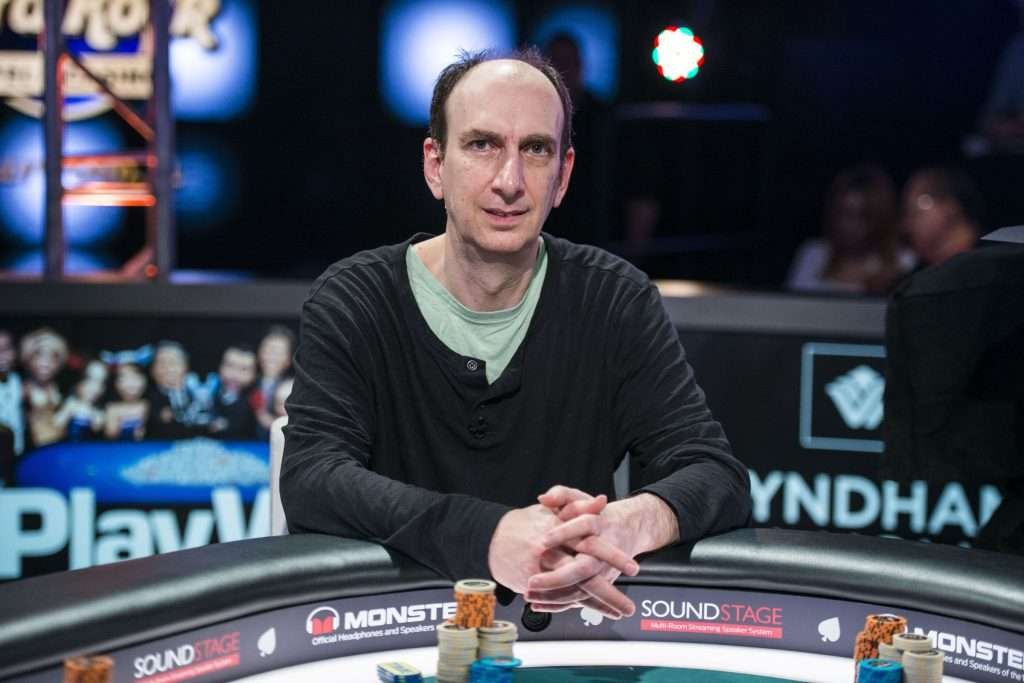
Image by World Poker Tour, via Flickr.com, under Creative Commons license.