The origins of a legend are often found far from the spotlight, but rather in the everyday experiences that forge their character and skill. The story of Johnny Chan, the iconic poker player nicknamed the “Orient Express,” is no exception. Before conquering the World Series of Poker and becoming a pop culture figure, his life was shaped by a childhood of constant change and an adolescence of personal discovery, during which the card game emerged as his true calling, defying family expectations. In this article, we will learn more about Johnny Chan’s childhood and adolescence.
A childhood in motion
Johnny Chan was born in 1957 in Guangzhou, China. His childhood was marked by change and adaptation. In 1962, when he was approximately five years old, his family moved to Hong Kong. In this environment, young Johnny began to develop a remarkable visual acuity. The bustling markets and the city’s energy taught him to interpret body language and people’s intentions.
In 1968, when Chan was around eleven years old, the family emigrated again, this time to Phoenix, Arizona. This change represented a monumental challenge for a child who barely spoke English and had to adapt to a radically different culture. Chan’s adolescence began under the shadow of struggling to fit into the American educational system. However, this “clash” did not daunt him; on the contrary, it reinforced his character. It was during this stage that he learned that communication goes beyond words, thereby perfecting his capacity for silent observation as he navigated the halls of his new school.
The definitive move occurred in 1973, when the family settled in Houston, Texas. It was here, within the family business environment, that young Johnny would first come into contact with the world that would define his life. His family owned restaurants, a fundamental fact that provided the context for his first steps in gambling. This work environment and customer service, typical of many immigrant entrepreneurs, offered Chan a practical education in effort and management—lessons he would later bring to the poker tables.
The family restaurants
The family restaurant business in Houston was more than a source of income; it became Johnny Chan’s first training ground for poker. It was in this setting that, in his spare time and after closing, he began playing cards with the establishment’s employees. These informal games were his practical introduction to the game. There, far from the formal academic pressures, Chan began to develop crucial skills intuitively: reading opponents, managing small gambling budgets, and understanding the psychological dynamics of a match.
This environment also sowed in Chan an interest in hospitality and management that he would later formally study in college. However, while working and playing in the restaurant, young Chan was already forging his own identity—one that would distance itself from the professional path his parents had worked so hard to build.
Las Vegas
The turning point that ignited Johnny Chan’s, passion for poker occurred during his adolescence, on a trip to Las Vegas at age 16. Despite being underage to gamble legally in casinos, he managed to buy chips for a cash game. What happened that night would become a legendary anecdote: he turned $500 into $20,000. This experience was electrifying—a tangible demonstration of his potential and the allure of the game.
However, the full lesson arrived the following day when he lost the entire $20,000. This drastic swing, instead of discouraging him, proved to be fundamental. It taught him, in the hardest way possible, the realities of the game: volatility, the need for control, and the importance of risk management. This emotional rollercoaster at such a young age did not extinguish his interest; it consolidated it, igniting a passion that would define his future.
Education is a crucial decision
Following the path that seemed logical given his family’s profession, Johnny Chan enrolled at the University of Houston. His major was Hotel and Restaurant Management, a clear attempt to formalize the practical knowledge he had acquired in the family business. However, his heart and mind were already elsewhere. The Las Vegas experience and the games at the restaurant had created a more powerful calling. At age 21, he made one of the most important decisions of his life: dropping out of college and moving to Las Vegas to become a professional poker player.
This decision was not well-received by his family, who saw gambling as an uncertain and risky path, especially in contrast to the stability of owning a business. Nevertheless, Chan was determined. His resolve was that of a young man who had found his calling and was willing to bet on himself. This courage to follow his own intuition, in the face of conventional expectations, would become a hallmark of his personality both on and off the table.
The forging of a style
Johnny Chan’s childhood and adolescent experiences didn’t just lead him to poker; they also sculpted the playing style that would make him famous—growing up in a “family business” environment instilled in him a solid work ethic. Professional poker, far from being a simple game of chance, requires discipline, study, and a dedication that Chan understood from a young age.
Daily interactions in the restaurant—serving a diverse clientele and managing staff—sharpened his ability to read people. This skill would translate directly to the poker table, where his famous ability to “read” his opponents would set him apart from other professional players.
Unlike other prodigies who might have excelled in strategy games like backgammon or chess since childhood, Chan’s path was more organic and practical. His genius was not forged in exclusive gaming clubs, but in the setting of a family restaurant and the vibrant atmosphere of Las Vegas. This unique background gave him a grounded, calculating, and highly effective style, which his rivals would later describe as “precise” and dangerous.
What do you think about this topic? Would you like to know more about Johnny Chan?
If you’re looking for the best platform to play poker online, you can contact us by visiting the following link.
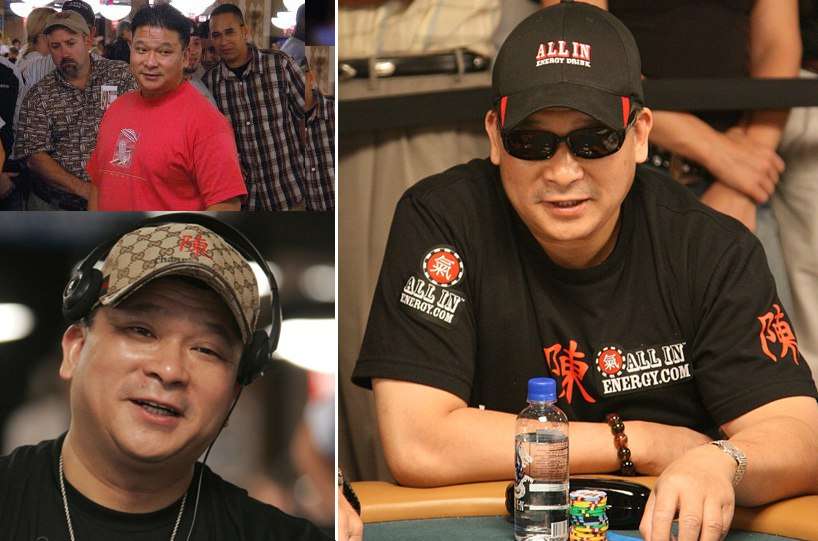
Top-left image by flipchip/Las Vegas via Wikimedia.com under Creative Commons license. Bottom-left image by Jae C. Hong via LasVegasSun.com and right image by Gene Bromberg via Flickr.com under Creative Commons license.