In the poker world, Phil Ivey is a benchmark. Nicknamed “The Tiger” and “No Mercy Ivey,” he is known as one of the most consistent and versatile modern poker players, especially at high-stakes tables. But every legend has an origin: for Ivey, it is the humble surroundings of Roselle, New Jersey, and Atlantic City’s gaming halls.
Phil Ivey’s childhood and adolescence shaped his unbreakable work ethic and innate talent for strategy games. His determination would lead him to the top of poker. In this article, we’ll explore more about Phil Ivey’s early years. With a resolve that defied his age, he became the most feared player in modern poker.
A modest beginning in riverside and roselle
Phil Ivey was born on February 1, 1977, in Riverside, California. However, it was in Roselle, New Jersey, where his formative years truly took shape. Raised in a working-class environment, his childhood was marked by values such as perseverance, humility, and respect for hard work. Although his family didn’t have great financial means, they provided him with a solid education. This would later be crucial in his career as a professional poker player. From a young age, Ivey showed a special curiosity for strategy games. This led him to develop an analytical and competitive mind.
The grandfather who sparked the flame
At eight, Phil received a lesson that changed his life. His grandfather, “Papa,” taught him five-card poker. The games were simple, five-cent bets, but the impact was profound. He learned not just the rules, but also observation, patience, and probability. These sessions weren’t mere recreation; they began his strategic education. Phil absorbed every detail, gesture, and pattern, developing intuition that later distinguished him at professional tables.
Games that shaped his mind
During his childhood, Ivey didn’t limit himself to poker. His interest in strategy games led him to master chess, backgammon, and dominoes. These games, although different in dynamics, shared a need to think “several steps ahead.” His friends described him as a quiet but intensely competitive child. He wasn’t the most extroverted. However, he was the most focused. He always sought to understand the rules thoroughly, find weaknesses in his opponents, and perfect his moves. This combination of outward calm and inner determination would be a constant in his personality.
From a very early age, Ivey’s competitiveness surfaced in any activity that involved an intellectual or physical challenge. He didn’t stick only to cards. He became obsessed with mastering any game he encountered, from chess to arcade video games. This need to compete and win was an internal engine that drove him to refine his skills constantly.
School as a mental training ground
Phil attended Old Bridge High School, where his academic performance was acceptable, but his true passion lay outside the classroom. Although he didn’t stand out as a traditional student, he did as a strategic thinker. During recess and after school, he organized games with his classmates—not just poker, but any game that required logic and competition. His ability to read people began to sharpen during this stage. He observed gestures, reactions, emotions, and silences—all of which helped him interpret what wasn’t being said, a skill that would later be essential in professional poker.
The Awakening of a passion
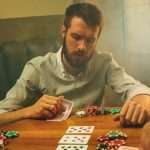
At 16, while other teenagers focused on sports or parties, Ivey was already immersed in the world of Texas Hold’em. Games with friends became more frequent and competitive. His obsession with the game grew, along with his desire to face more experienced opponents. It was then that, along with some friends, he began forging IDs to enter Atlantic City casinos. Under the alias “Jerome Graham,” a name taken from a friend of his father, Ivey began playing at real tables, facing adults with years of experience.
The alias that protected and propelled him
Using a false name not only allowed him to access casinos as a minor but also gave him a kind of psychological shield. “Jerome Graham” was more than an alias; it was an identity that allowed him to experiment, fail, and learn without compromising his real name. This duality gave him the freedom to explore his playing style, make mistakes, and correct them. At the tables, players underestimated him because of his youth, but they soon realized they were facing exceptional talent. His ability to read situations, adapt, and make calculated decisions made him stand out even among veteran players.
Learning on the battlefield
The casinos of Atlantic City were Ivey’s true school, where he learned to handle pressure, control his emotions, and perfect his technique. Ivey was a sponge, absorbing every detail: betting patterns, nervous tics (tells), winning strategies, and perhaps most importantly, the costly mistakes of losers. He analyzed the game with a depth that went beyond mere observation. He began playing at low-limit tables, mainly $10/$20 and $20/$40 Seven-Card Stud and Hold’em, games that were popular at the time.
Ivey played for hours, watching his opponents, analyzing patterns, and adjusting his strategy. He wasn’t afraid to lose; he saw every defeat as a lesson. Initial losses, inevitable for any novice, didn’t discourage him. On the contrary, he saw them as tuition for the most valuable education he could receive. Every dollar lost was a lesson learned, another piece of the strategic puzzle he was meticulously assembling in his mind. It was at these tables that he began to refine his relentless style and his impassive “poker face,” a mask of serenity that concealed a mind in constant calculation.
His evolution was rapid. In a short time, he went from being a curious teenager to a respected player at the tables. His aggressive yet calculated style, his bluffing ability, and his precise reading of opponents made him an emerging figure in the local circuit.
From Atlantic City to Las Vegas
At 21, the legal age to play, Phil Ivey was no novice. He already had years of real-table experience and a game understanding rivaling seasoned professionals. His move to professional play was seamless. Poker was already part of his daily routine. Shortly after his birthday, he made a defining choice: moving to Las Vegas, the mecca of poker.
Ivey arrived in the city with modest savings but unlimited confidence in his abilities. His early days in Vegas weren’t glamorous but filled with hard work. He stayed in cheap motels and played at mid-limit tables in casinos like The Mirage and The Bellagio. He quickly earned the respect of the poker community. His reputation as an aggressive, intelligent, and nearly unshakable player spread rapidly. It didn’t take long before he started achieving significant tournament results. These culminated in his first victory at a World Series of Poker (WSOP) event in 2000, where he took home his first bracelet and a $195,000 prize.
Formal education vs. strategic education
While his peers considered college, Ivey knew his path was different. He finished high school but was not interested in a traditional academic career. His education came from the poker tables, strategy books, and conversations with experienced players. He read about game theory, probabilities, and behavioral psychology. He didn’t just want to win—he wanted to understand the game in all its dimensions, developing a style based on observation, intuition, and adaptability.
From prodigy to living legend
Phil Ivey didn’t achieve success by accident. His childhood and adolescence were a constant preparation, an accumulation of lessons, challenges, and bold decisions. From games with his grandfather to clandestine nights in Atlantic City, every moment contributed to his development. Today, with eleven World Series of Poker bracelets and a place in the Hall of Fame, Ivey is recognized as a legend. But behind the titles and fame lies a story of effort, passion, and strategy that began long before the world knew his name.
What are your thoughts on this topic? Would you like to learn more about Phil Ivey?
If you want to find the best poker deals online, visit the following link to contact us.
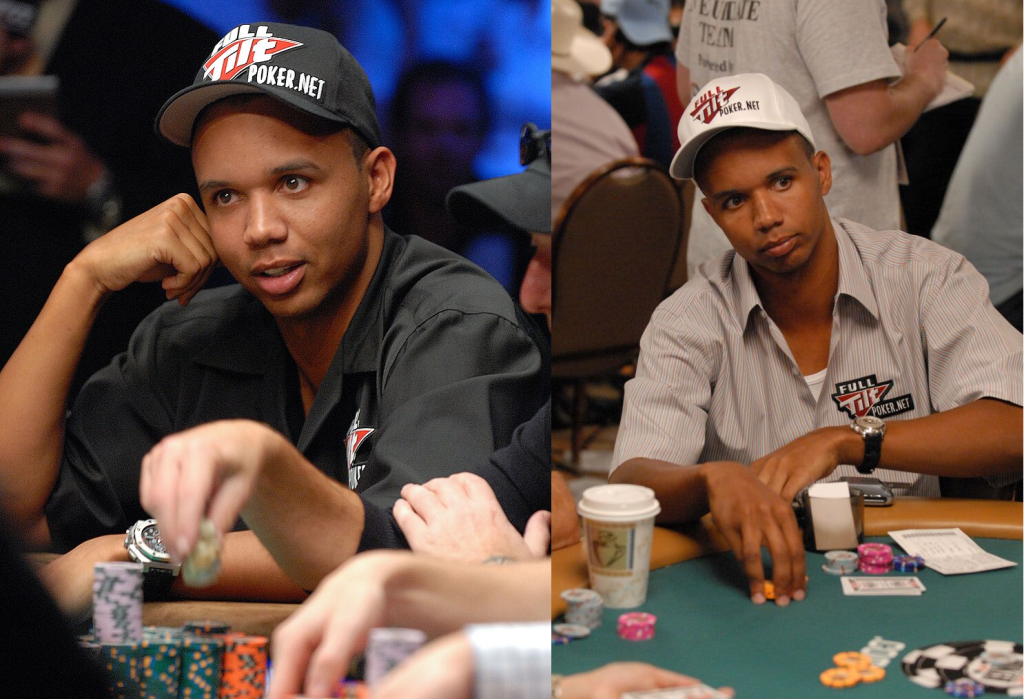
Image by LasVegasVegas Flipchip Poker and Las Vegas Photo Galleries via Wikimedia.org under Creative Commons license.