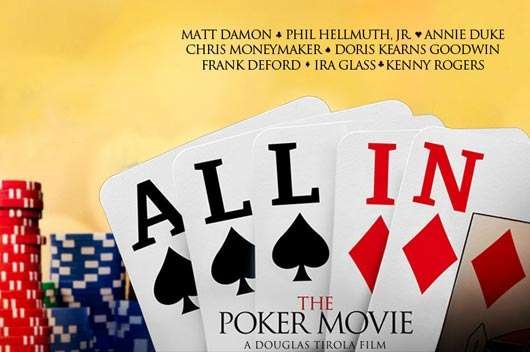
Poker has transcended generations, evolving from underground games to become a global phenomenon. The film All In, directed by Douglas Tirola, is a documentary that analyzes the rise of poker in American culture and how it went from a simple card game to a multi-billion dollar industry.
Synopsis and historical context
All In: The Poker Movie is a documentary that traces the history of poker in the United States, from its origins on Mississippi River boats to its explosion as a television and online phenomenon in the early 21st century. The film focuses on three key moments, which are the beginnings of modern poker (initially associated with underground rooms and marginal characters), which became popular in the 20th century thanks to figures such as Amarillo Slim and tournaments such as the World Series of Poker (WSOP), the 2003 “Moneymaker effect” and “Black Friday,” recounting the events of April 15, 2011, when the U.S. government shut down major online poker sites (PokerStars, Full Tilt Poker and Absolute Poker), marking a decline in the industry.
The documentary includes interviews with professional players like Annie Duke, celebrities like Matt Damon (star of Rounders), and analysts debating whether poker is a game of skill or luck. Unlike traditional documentaries, All In is fragmented, jumping between interviews, archival footage, and philosophical musings on the game. Some critics point out that this lack of linear structure can be confusing, but others argue that it reflects the unpredictable nature of poker.
Poker’s impact on society
The documentary features interviews with iconic poker figures, such as Phil Hellmuth and Daniel Negreanu, who offer their perspectives on the game’s growth and impact on American culture. It also looks at how poker became a way to achieve the “American Dream,” allowing players from different backgrounds to compete on a level playing field.
The “Black Friday” of poker
One of the most important topics addressed in All In: The Poker Movie is poker’s “Black Friday,” which occurred on April 15, 2011. On this date, the U.S. government shut down the three leading online poker sites, PokerStars, Full Tilt Poker, and Absolute Poker, accusing them of fraud and money laundering. This event devastated the online poker industry, affecting thousands of players and changing the way poker was played in the country.
Reception and legacy
The documentary received positive reviews for its detailed approach and ability to capture poker’s essence as a cultural phenomenon. Although it is not a fictional film, its narrative succeeds in conveying the emotion and drama surrounding the world of professional poker. All In received divided opinions, as it highlights its strengths, its ability to capture the excitement of poker, and feature interviews with key figures. However, some critics feel that the film is too complacent with the industry and does not delve into the negative aspects, such as gambling addictions.
All In: The Poker Movie is a must-see for any poker fan. Through interviews, historical analysis, and key moments in the game’s evolution, the documentary offers an in-depth look at how poker went from a pastime to a global industry. For those seeking to understand the impact of poker on society and its evolution in the 21st century, this film is an excellent choice.
What are your thoughts on this topic? Do you want to know more about poker movies?
If you want to find the best poker deals, you can contact us by visiting the following link.